
Niomi Hamilton, Lead for Community Health and Wellbeing
It was one of those typical October mornings — drizzly, grey, and stubbornly damp — when I joined the Food Train team for a day of deliveries across Heathhall and Kirkmahoe.
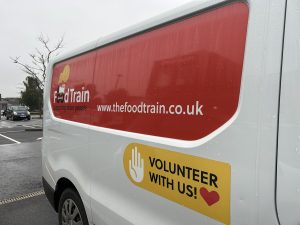
I met the local coordinator, Jo, at Morrisons, where volunteers were already scanning and sorting shopping for the day’s runs. I was paired with an experienced volunteer, Alan, who’s been doing this for four years. Alan started after Covid because he “wanted to give something back.” You hear that phrase often, but after spending a day in the passenger seat beside him, I realised it’s more than just a throwaway line.
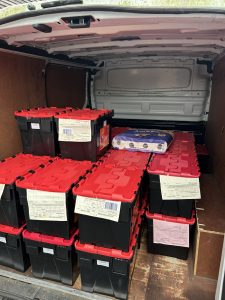
After collecting orders from both Morrisons and Tesco, we packed the van with boxes marked neatly for each customer — some with just a few items, others stacked high. Then we set off on a route Alan knew like the back of his hand.
More Than Deliveries
Every stop told its own story.
At one home, an elderly woman recently widowed was still finding her footing. Her loneliness hung heavy in the air, but she visibly relaxed the longer she chatted with us. For her, this wasn’t just a delivery — it was connection, consistency, and someone who knows her routine enough to check she’s okay.
At another stop, we delivered to an older couple — he’s a full-time Carer for his wife, who’s terminally ill. While I unpacked their shopping, he told me about a recipe that he used to make with his Grandmother as a child that he was planning to cook that evening because it’s one of his wife’s favourite meals. He said he tires more easily now. Whilst he used to enjoy that time when he supported his wife into bed and then enjoyed a couple of hours of reading, he now rarely makes it more than 10-15 mins before falling asleep on the sofa. There was something quietly moving in how normal that all felt — ordinary moments of love holding everything together.
Further along the route, a man living with the aftermath of a major stroke opened his door. His world has become smaller recently following the loss of his wife (who was also his main Carer) , his grief still incredibly raw. He talked about trying to stay on top of bills and appointments, but it’s clear that even small tasks feel like mountains right now. He’s lonely and struggling to juggle all of the things his wife used to take care of.
And then there was a moment that caught me off guard. We pulled up outside a house, and the lady inside was taking longer than usual to answer. Alan glanced at the window and said quietly, “Her ironing board’s not there.” Apparently, she irons every Tuesday and usually leaves it near the window. The concern in his face said everything — this wasn’t just about checking a box off a delivery list; it was about making sure someone was okay. These volunteers, they know the people they are delivering to, they know the routines and notice the small things that indicate something isn’t all ok.
The People Who Keep It All Going
By the time we’d done 14 deliveries, we’d met people from all walks of life — Carers, widows, couples, centenarians — each one different, each one relying on Food Train in their own way. The volunteers knew who liked to chat, who preferred quiet, who needed help, and who might just need a moment of kindness.
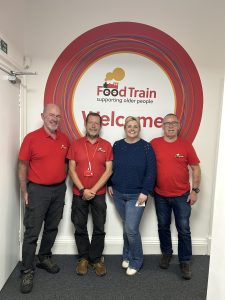
Back at the office, I met more of the team — volunteers finishing their own routes, catching up, and swapping stories, Maggie had just returned from making her own deliveries to a service nearby where she provides hot soup and a roll to residents. Maggie prepares the fresh food, makes lunches, feeds volunteers and generally lines the tummy’s of whoever will sit still long enough! Maggie’s lunches and soups are sometimes the only warm meal some of the older people in receipt of them will have that day. The energy in the room was warm but purposeful — no fuss, no fanfare, just people quietly making a difference.
What I Took Away
I’ve worked with community organisations long enough to understand the difference they make — but you can’t truly believe it until you see it up close.
You start to notice what care really looks like. It’s not grand gestures or press releases — it’s an ironing board moved from a window, a familiar knock on the door, a quick chat about someone’s week. It’s the kind of care that keeps people connected to the world when life gets small and quiet.
Driving home, damp and thoughtful, I realised how much this day had shifted my perspective. Food Train isn’t just about groceries. It’s about dignity, community, and the kind of everyday humanity that holds people together. Food Train and it’s volunteers are literally the link that holds people together and keeps some really vulnerable people out of hospital and well in their own homes.