Third Sector Dumfries and Galloway (TSDG) has welcomed the announcement of a £20 million fund to support families living in poverty, or at risk of, poverty across Scotland.
The Whole Family Support Third Sector Delivery Fund reflects the essential role that third sector organisations play in tackling poverty and standing alongside families when they need support most.
But TSDG cautioned that the fund criteria did not reflect the importance of place-led working that was so central to the Government’s stated aims of Whole Family Support.
Across communities, organisations are already delivering practical help, financial advice and emotional support, often acting as trusted and consistent partners for families.
Locally, TSDG is starting the work to ensure an integrated approach is taken across sectors and services, so that families do not have to move between different agencies to get the support they need and are asking for.
TSDG has emphasised with the Scottish Government that making this important investment only available to national organisations and cross-authority/multi-authority partnerships does not help embed that approach and risks creating parallel, not integrated, ways of working.
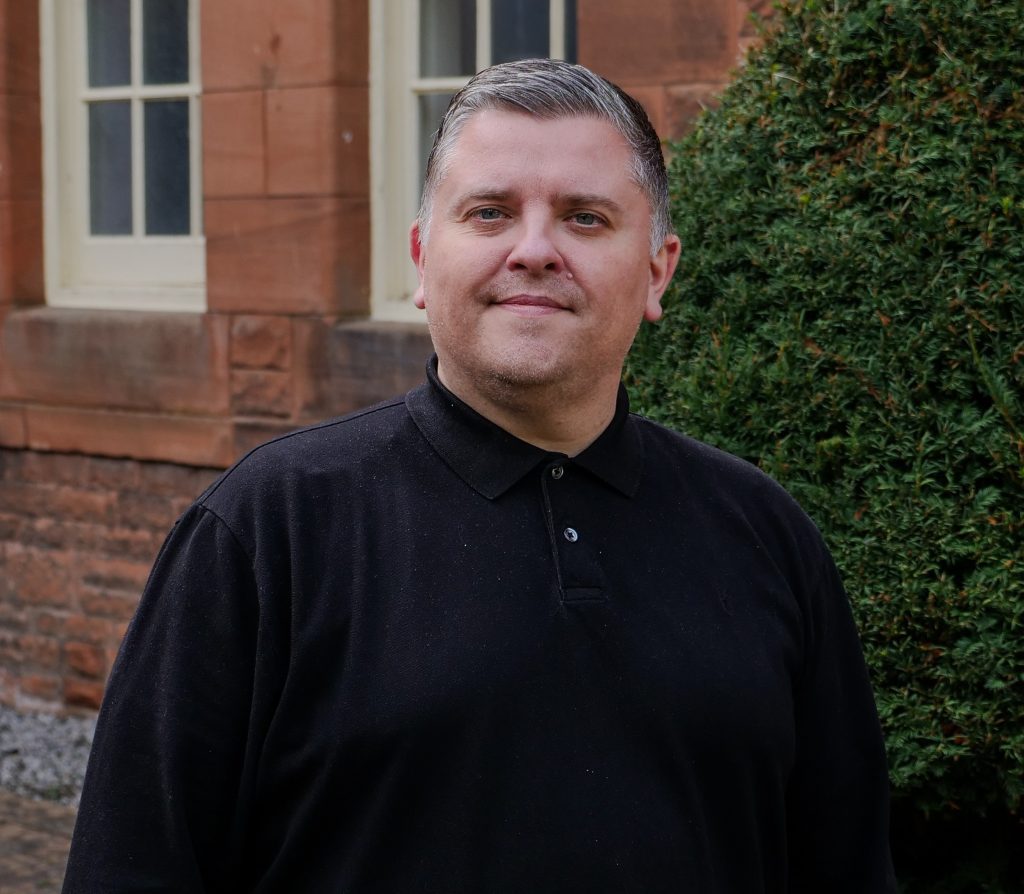
Alan Webb, TSDG CEO, pictured, said: “We welcome this direct investment in the third sector and the recognition of the vital role our organisations play. At the same time, it is essential that local design, local involvement, and local responses are prioritised. Support must be fully integrated with existing local plans so that families do not face even more fragmented systems, and we think this fund misses that important opportunity.”
The issue was raised in the Scottish Parliament on Wednesday in a question to Shirley-Anne Somerville MSP, Cabinet Secretary for Social Justice.
Emma Harper, MSP for South Scotland, asked the Cabinet Secretary how the delivery model would work alongside existing local partnerships and called on the government to consider that model to ensure locally led, place-based approaches, such as those in Dumfries and Galloway, could be supported to help ensure the best possible outcomes for families.
The Cabinet Secretary responded to say it was important to learn from good practice happening across Scotland. The place-based approach was also important because local communities knew what was needed most.
She said: “That is exactly why there is so much emphasis placed within the action plan and whole family support, giving that support to families where and when they need it, and delivering that in a way that is right for the communities.”
TSDG noted that the timing and pace required to establish any new collaboratives and partnerships will be extremely challenging, especially for smaller organisations, which are often closest to families.
The fund currently plans to support up to 10 third sector organisations with a share of the £20 million for 2026/27, with this expected to continue and move to a multi-year basis from 2027/28, subject to future confirmation.
TSDG has consistently advocated for a locally led and designed model for Whole Family Support, in line with wider government strategies. This is supported by the local Children’s Services Partnership, who also call for local integration with other funds and approaches, like Whole Family Wellbeing Fund and Fairer Futures Partnerships.
In a recent article, the Cabinet Secretary for Social Justice said “Eradicating child poverty is not something any government can do alone. It requires the NHS, local councils, charities, employers and communities all pulling in the same direction. That is why we are establishing a new £20m Whole Family Support Third Sector Delivery Fund — enabling community organisations to wrap support around families and provide the open and approachable route into public services that families have told us they need.”
TSDG fully agrees and is concerned as to why this is not reflected in the fund criteria.
Alan said: “Including grant fund criteria that requires plans for partnership and a knowledge of local priorities does not make this fund place-led or place-based. That requires much deeper integration with local context and across a range of partners and services, the very ambitions and purpose of Children’s Services Partnerships, which are being by-passed, and our local collaboration model.
“We will support our local sector as much as possible, however we would much prefer the Scottish Government rethink the delivery of this investment in line with their own stated priorities of place-led and locally integrated approaches that are sustainable,”
TSDG reiterated that the long-term impact of the fund will depend on how effectively it strengthens local systems, builds on existing community relationships, and keeps experiences and agency of families at its centre.
For more information about the fund: www.gov.scot/publications/whole-family-support-third-sector-delivery-fund/